


Dolit
A dense limestone for surfaces that are walked on all year.
Croatian architectural and building limestone, from the Dalmalit quarry.
- Compressive strength
- 134 MPa
- Water absorption
- 0.20 %
- Böhme abrasion
- 17.1 cm³/ 50 cm²

How it looks
- Colour
- warm beige with quiet grey and brown veining
Dolit is a warm beige stone with quiet grey and brown veining. How much of it any one slab carries depends on where in the deposit the block came from: the same field gives up calm slabs and heavily figured ones alike.
It is specified for properties a sample does not show. Dolit is dense, and it takes up about a fifth of one per cent of water, roughly five times less than Plano, so neither moisture nor what moisture brings with it gets inside the stone. It also wears more slowly: 17.1 cm³ per 50 cm² on the Böhme test against Plano's 21.8.
So it goes where surfaces work hardest: the seafront promenade on Pag, town squares, terraces exposed to the bora, outdoor steps in use all year.
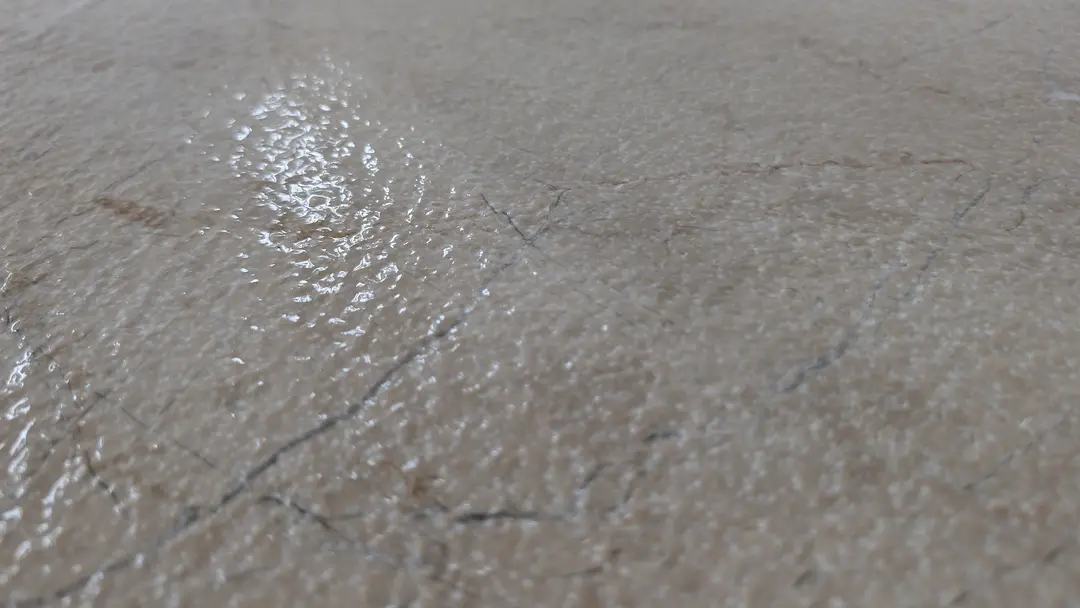
Polished, Dolit takes a deep shine and the veining comes up clearly. That is how it goes indoors: worktops, cladding and details seen at close range.

One stone, nine finishes
We put polished and honed on cladding and interior floors: polished deepens the colour and brings up the veining, honed is smooth and matt. Outside, and anywhere a surface gets wet, it is sandblasted, bush-hammered or brushed, because those do not get slippery. We do all the finishing ourselves, at Plano.
The slabs were photographed at the plant, with no colour correction. How much veining a slab carries depends on where in the deposit the block came from, so we send a sample of any finish on request.


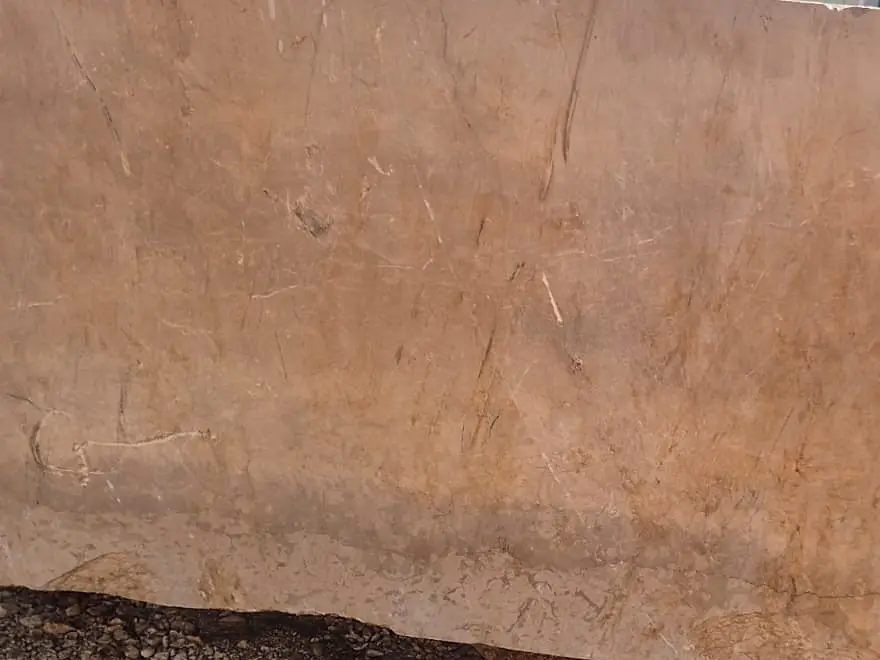
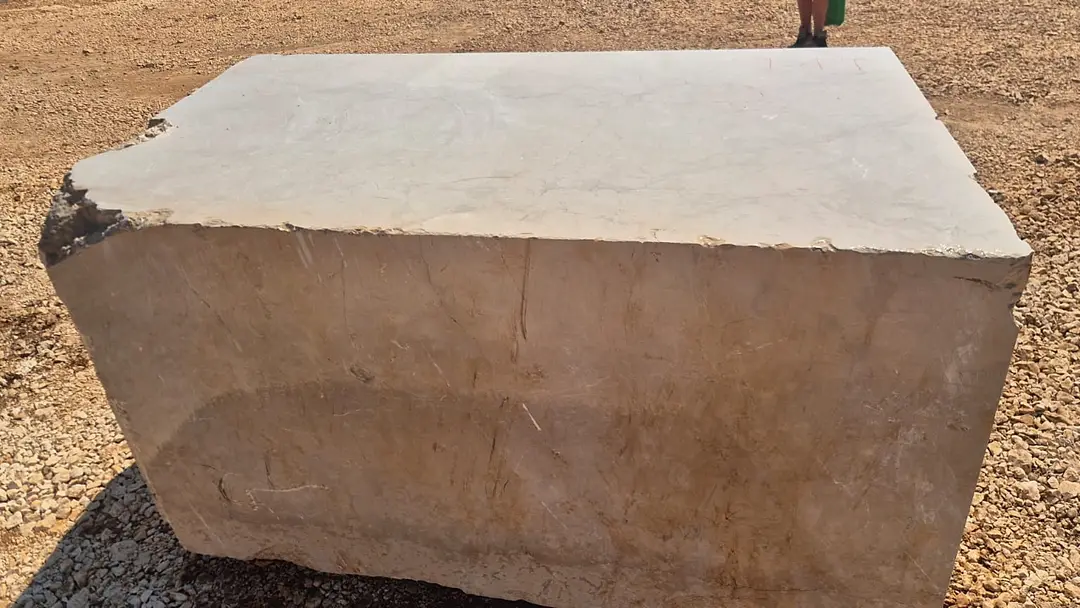
Before any finish 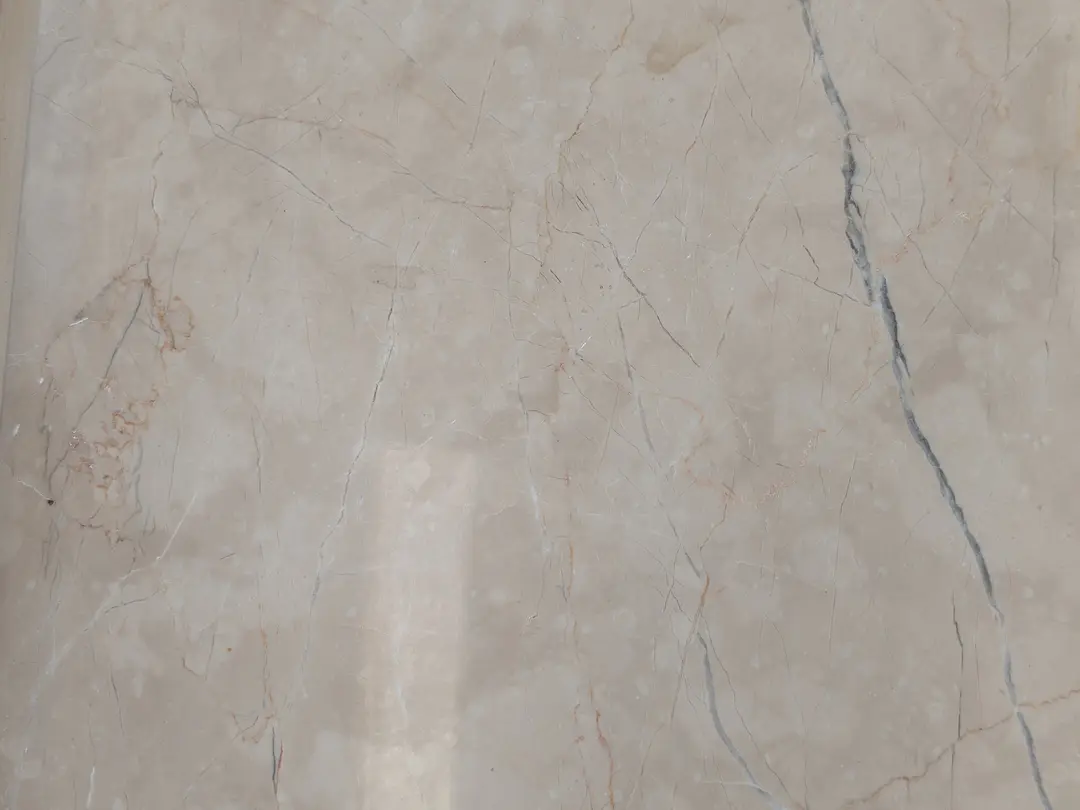
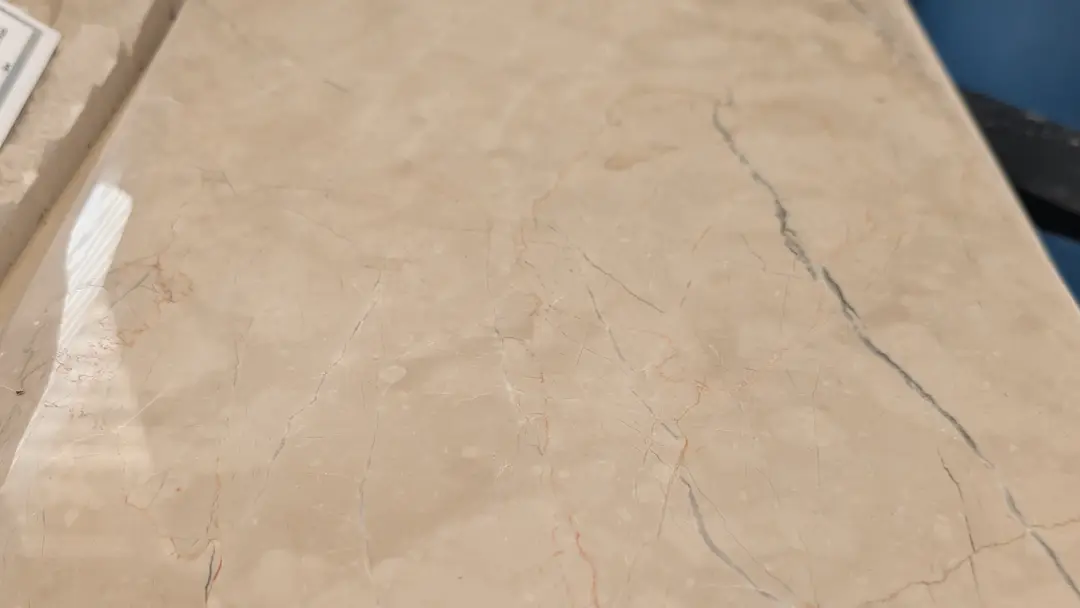
Mirror gloss, colour at its deepest 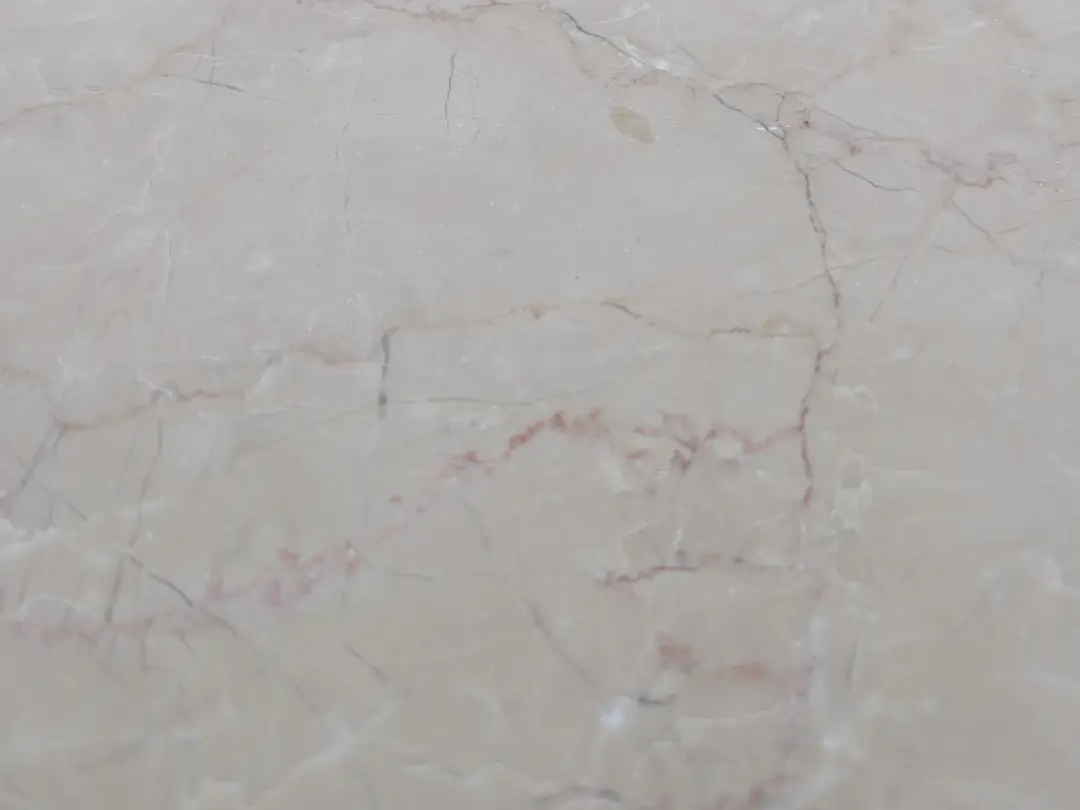
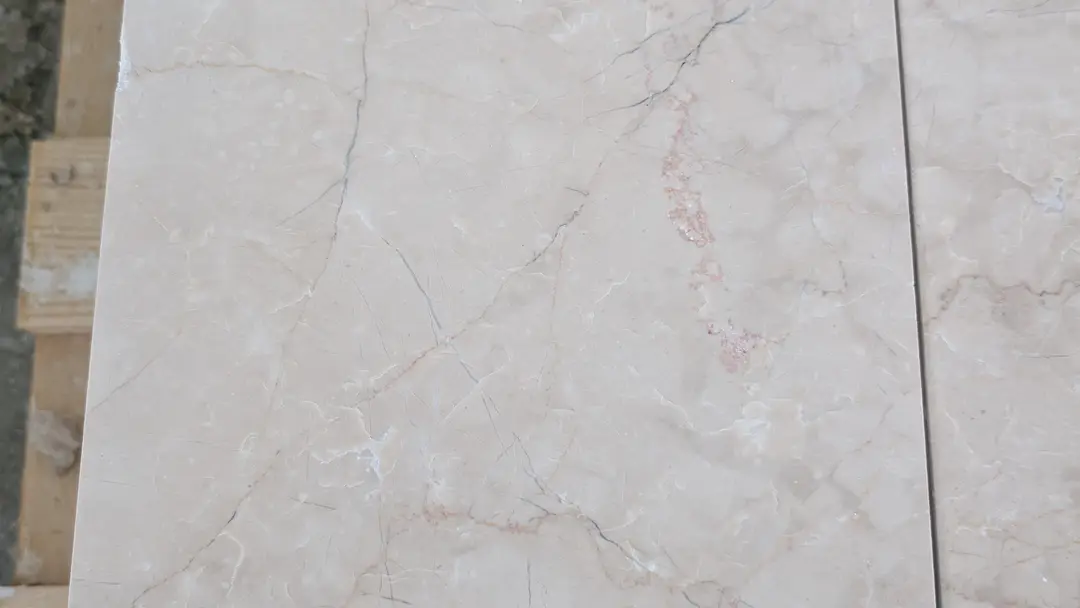
Matt and smooth, no glare Matt and smooth, no glare 
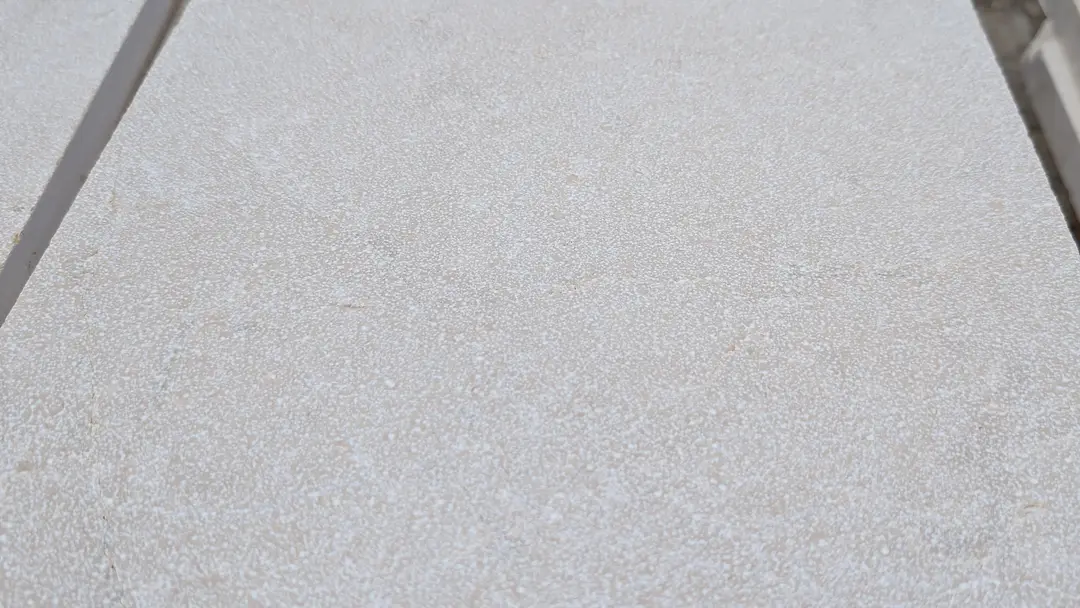
Sandblasted, then brushed 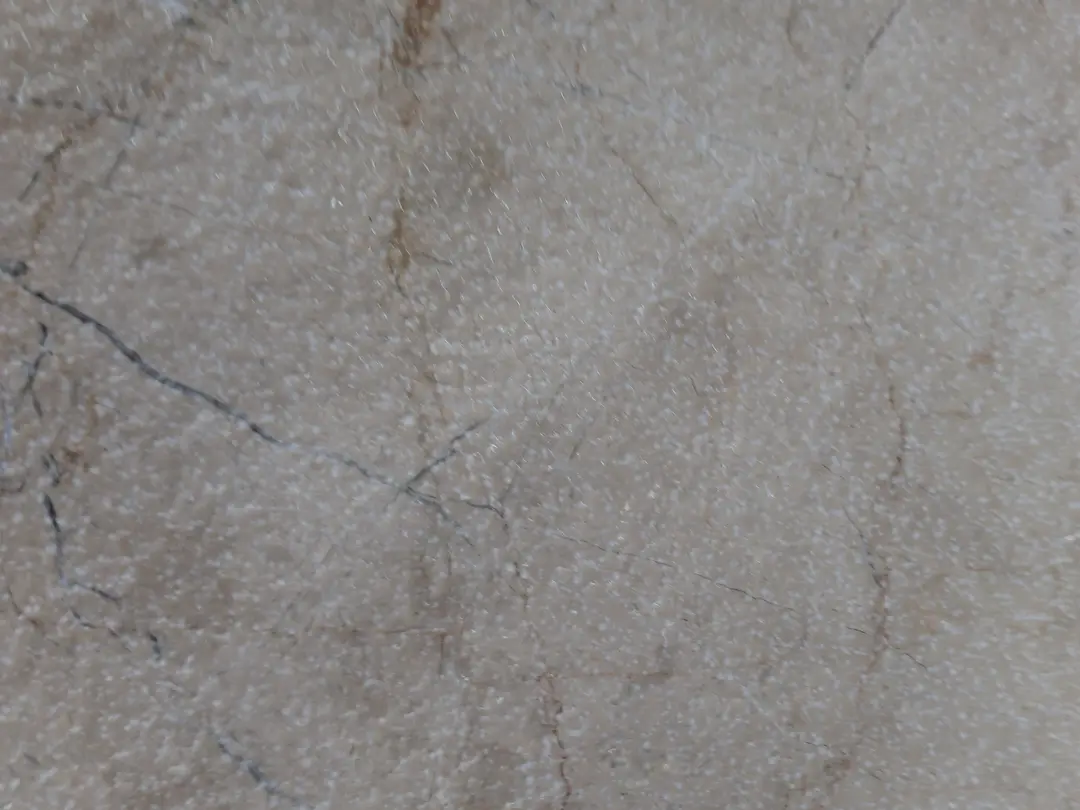
Bush-hammered, then brushed 
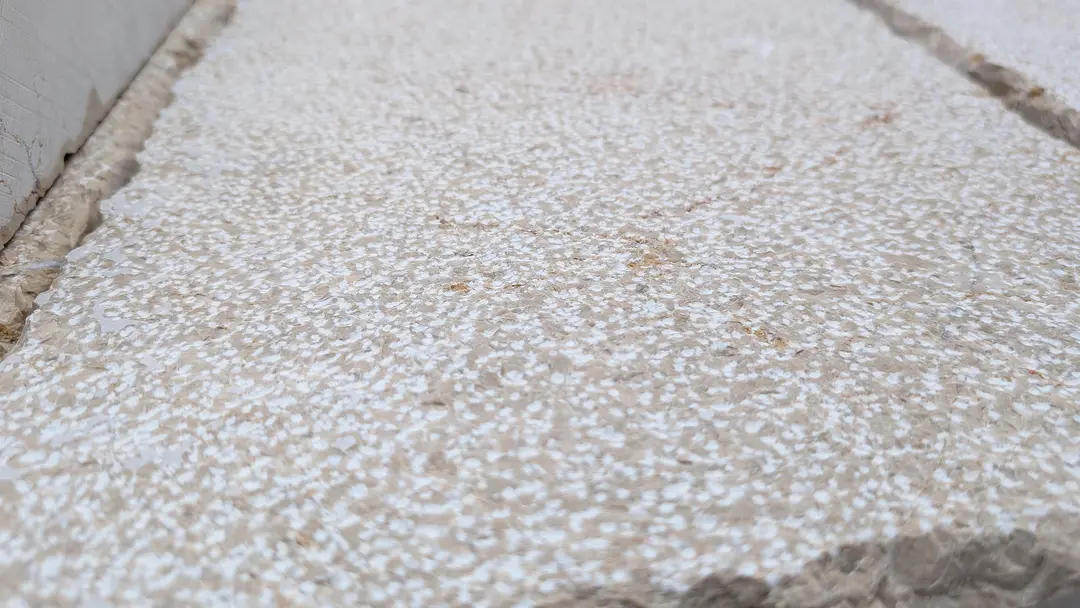
Coarse bush-hammer texture 
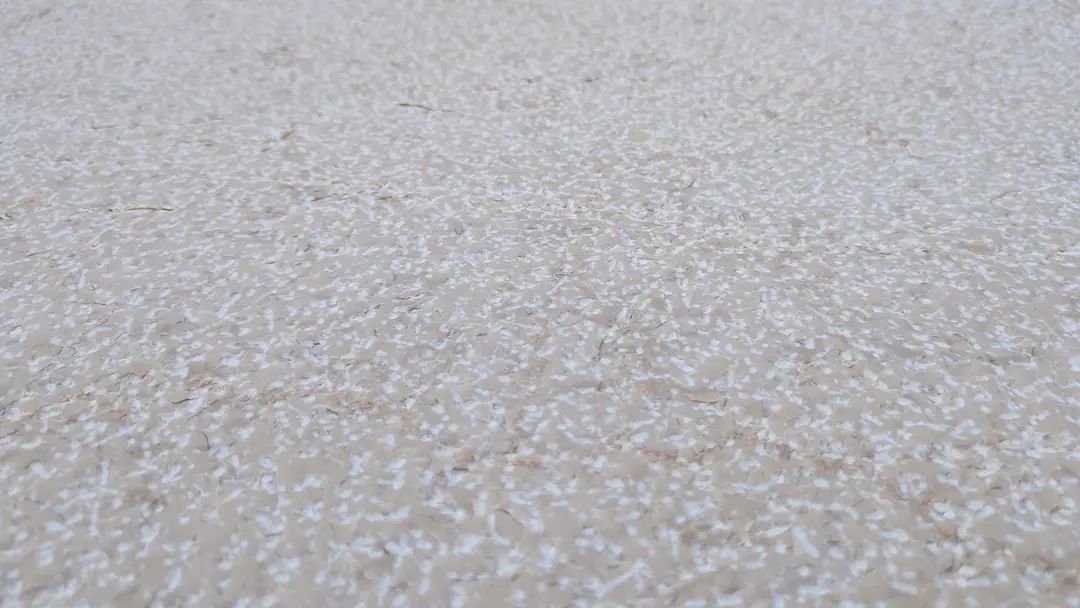
Coarse bush-hammered, then brushed


The slabs were photographed at the plant, with no colour correction. How much veining a slab carries depends on where in the deposit the block came from, so we send a sample of any finish on request.
Where it is used

- external and internal floors
- stairs, treads and risers
- public spaces and promenades
- terraces
- pool copings
- wall copings
- window sills
- thresholds
- adhered stone cladding
- kitchen worktops
- wall cladding
- cut-to-size elements
Technical data
The figures are from the deposit's quality report and we are still checking them. The report goes up here as soon as it is confirmed.
- Real density
- 2695 kg/m³
- Apparent density
- 2685 kg/m³
- Compressive strength
- 134 MPa
- Flexural strength
- 10.5 MPa
- Water absorption
- 0.20 %
- Absolute porosity
- 0.37 %
- Böhme abrasion
- 17.1 cm³ / 50 cm²
Technical documentation
The Declaration of Performance, the technical data sheet and the exploitation field report are sent on request.
Where it comes from

Built in Dolit


How it behaves over the years
Dolit needs less maintenance than most limestones because it is dense and absorbs little, so moisture and dirt stay on the surface instead of getting into the stone.
Outdoors that leaves most of the work to the rain. Deposits and patina that do build up sit on the face and wash off, with no consequence for the structure.
Indoors the rule for every limestone applies: no acid. Wine, lemon and acid-based cleaners etch calcium carbonate and leave a matt mark on a polished face. Wipe a spill rather than leave it standing.
Why Dolit rather than Plano?
It comes down to how hard the surface is used. Plano is paler and quieter and holds a large surface without a break, which is what puts it on facades and on floors that are meant to be looked at. Dolit is denser, absorbs less and wears more slowly, which is what puts it on public ground, promenades and outdoor steps. A house often ends up with both: Plano on the facade, Dolit on the terrace and the steps.
How much veining will show?
That depends on the block. The same field gives slabs that are nearly plain and slabs that are strongly figured, so for any one surface we select slabs from one block and lay them in the order they were sawn. The sample you see at a fair or at the plant is one block, not the whole deposit, so for a large surface come and see the slabs.
Will it take a pool surround or a seafront walk?
Yes, and that is what most of it goes into. Choose a rougher finish, sandblasted or bush-hammered, since a wet polished face is slippery. Copings are made with a rounded edge and a drip groove underneath, so water leaves the edge instead of tracking back under the slab.
Does it work in a kitchen?
It will take a hot pan and a knife. It will not take acid. Limestone is calcium carbonate: wine, lemon and vinegar leave a matt mark on a polished top, and that mark comes out by re-polishing rather than by any cleaner. If those are daily ingredients, seal the top and wipe spills as they happen.
Can it be cut to size?
Yes. We make worktops with cut-outs for the sink and the hob, copings with a drip groove and treads with their risers, all to the drawing and numbered by position.
Get a quote
To price this stone we need to know where it is going, how much there is and in which finish. That is three taps on the form.
A few taps. Only your name, your email and what you need are required.